
Yorkshire Coast & Wolds
Primary Care Network
A fresh look at Health

A fresh look at Health
Atrial Fibrilation is a heart condition that causes an irregular and often abnormally fast heart rate. A normal resting heart rate should be regular and beating at between 60 and 100 beats per minute.
Some people with atrial fibrillation, particularly older people, do not have any obvious symptoms. Heart rhythm is only discovered during routine tests for other conditions.
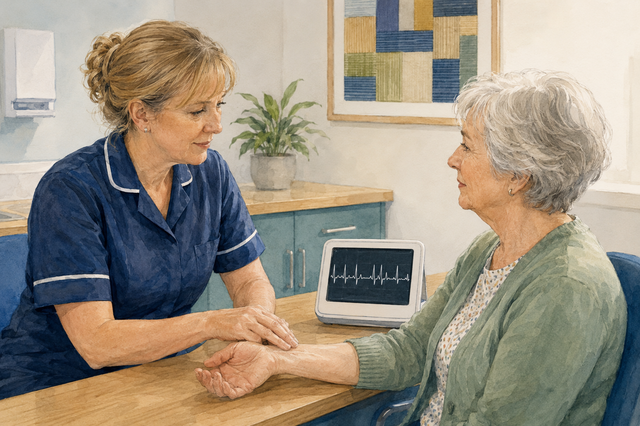
People with atrial fibrillation are at increased risk of having a stroke. In extreme cases Atrial Fibrillation can also lead to heart failure. AF can be detected by simply checking your pulse.
Checking and assessing your pulse can give you a good indication of whether you have atrial fibrillation, but a full medical investigation will be needed before a diagnosis can be made.
If AF is suspected, a GP may conduct an electrocardiogram and refer you to a heart specialist.