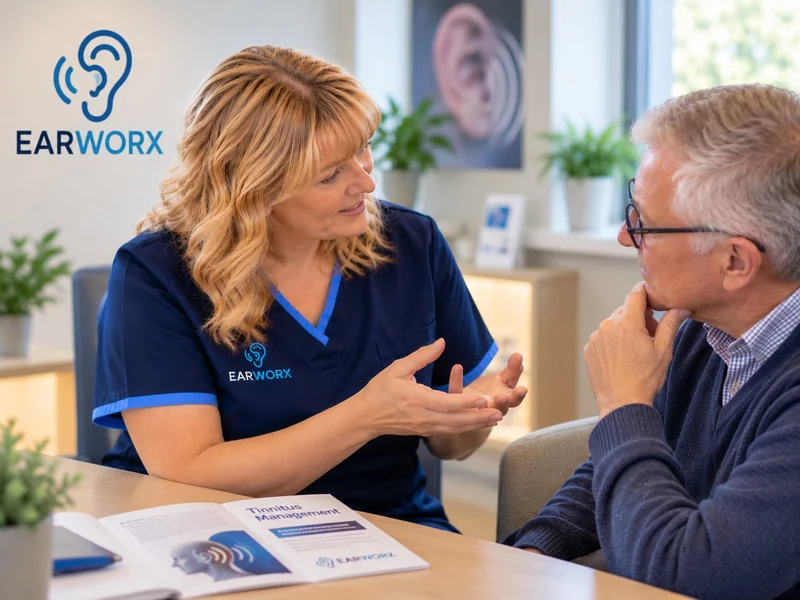
Tinnitus describes hearing a sound when there is no matching sound coming from outside. People often describe ringing, humming, hissing or buzzing. It may come and go, or it may be there much of the time. Some people barely notice it; for others it affects concentration, relaxation or sleep.
Why does tinnitus happen?
Tinnitus is not a disease in itself. It can be associated with changes in hearing, exposure to loud noise, certain ear conditions and sometimes a build-up of earwax. Stress may make the sound seem more intrusive, even if stress was not the original cause. There is not always an obvious explanation.
This is why an ear-health conversation can be useful. A practitioner can look for visible problems such as obstructing wax, while a hearing test assesses whether hearing has changed. An ear examination is not a substitute for a full audiological assessment.
What may help day to day?
- Try gentle background sound rather than struggling in complete silence, especially at bedtime.
- Protect your hearing around loud music, machinery and noisy activities.
- Keep a regular sleep routine and find manageable ways to reduce stress.
- If tinnitus is affecting your wellbeing, ask about evidence-based tinnitus counselling or cognitive behavioural therapy.
- If hearing loss is also present, a qualified audiologist can advise whether hearing aids could be beneficial.
There is no single cure for every case of tinnitus. The aim is to understand the symptoms, identify any treatable problems and find ways to reduce their impact. NHS and RNID advice includes sound enrichment, stress management and appropriate specialist support.
When should you seek medical advice?
Seek urgent medical advice for tinnitus that pulses in time with your heartbeat. Tinnitus with sudden hearing loss, facial weakness or a spinning sensation requires emergency assessment. Persistent or one-sided tinnitus also merits a medical review rather than simply booking routine wax removal.
How Earworx can help
Earworx offers ear checks and tinnitus conversations in Hull. The team can discuss your concerns, look for visible ear-health issues and explain when hearing testing or further medical assessment is appropriate. The visiting audiologist also offers free hearing tests on Mondays, subject to appointment availability. These services support—but do not replace—medical diagnosis or specialist tinnitus care.
Find out more
This article offers general information, not individual medical advice. Contact your GP or NHS 111 for medical concerns; seek emergency help where indicated.
← Back to Blog index